
Food Paper Can Odor Control: A Sensory Testing Guide for Buyers
Specialty coffee, tea, spices and nutrition powders are purchased partly for their aroma and flavour. Their packaging can look premium and remain physically intact while still causing a quality complaint if paperboard, ink, adhesive, liner or warehouse odour enters the pack. For buyers, sensory neutrality should therefore be specified and verified alongside dimensions, sealing and print appearance.
The European food-contact framework makes this more than a preference. Article 3 of Regulation (EC) No 1935/2004 requires food-contact materials to be manufactured so that, under normal or foreseeable use, they do not transfer constituents in quantities that endanger health, unacceptably change food composition or impair organoleptic properties. Organoleptic properties include characteristics perceived by the senses, such as smell and taste.
In April 2026, Germany’s Federal Institute for Risk Assessment opened a consultation on a consolidated revision of its paper and board food-contact recommendations. BfR states that these recommendations are not binding legal standards, although they represent scientific and technical knowledge for certain materials. The consultation itself did not create a new sensory pass limit. It is a timely reminder that paper-based food packaging must be reviewed as a complete material system.
Separate Four Different Sensory Risks
A clear brief starts by separating packaging odour, flavour taint, aroma loss and barrier failure. Packaging odour is a smell detected from the empty material or finished can. Flavour taint is an unwanted change perceived in food after contact or storage. Aroma loss occurs when desirable volatile compounds leave the product or are absorbed by packaging. Barrier failure allows moisture, oxygen or external odours to enter. These problems can overlap, but one test does not answer all four questions.
For example, an empty tube may smell acceptable while coffee stored inside develops a foreign note over time. A foil liner may reduce aroma loss while an adhesive near the seam remains a potential odour source. A sensory result also cannot replace moisture-vapour, oxygen-transmission or seal-integrity evidence when those properties are required.
Map Every Potential Odour Source
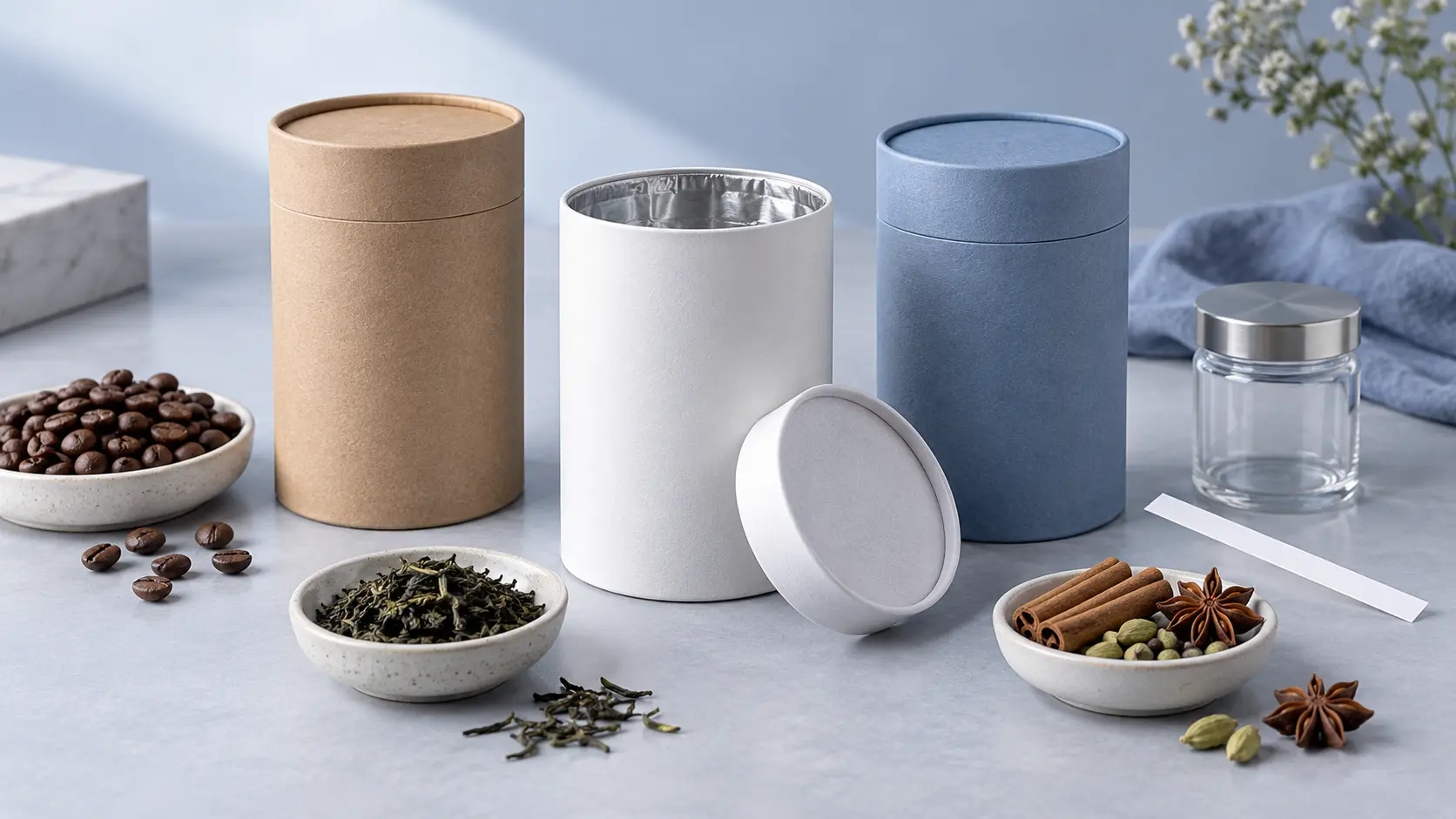
Create a component list for the production version: structural paperboard, recycled or virgin fibre layers, printed outer wrap, inks, varnish, lamination, adhesives, barrier liner, membrane, lid, base, insert and shipping carton. Record the supplier and lot, printing process, coverage, curing or drying condition, storage age and direct or indirect contact with food.
Odour can come from a raw material, incomplete drying, interaction between layers, absorbed warehouse chemicals or transport contamination. Printed and unprinted samples should be compared because the graphic layer may change the result. The strongest ink coverage or most extensive coating is often a more useful evaluation sample than a lightly printed design.
Define the Intended Food and Foreseeable Use
Sensory testing should represent the product and use conditions. Tea leaves, roasted coffee, ground spices and neutral protein powder do not interact with packaging in the same way. Define whether food touches the liner, closure or paper surface; the expected storage time; temperature range; filling condition; headspace; opening frequency; and whether a separate inner pouch is used.
If several products share one canister, choose test products or simulants that reflect the most relevant sensory risks. Do not assume that a result for coffee automatically covers a delicately scented tea. Likewise, accelerated storage can be useful only when its relationship to real use has been technically justified. Excessive heat may create reactions that would not occur during normal distribution.

Use Sensory Methods With Controls
ISO 13302:2003 describes methods for assessing changes caused by packaging to the sensory attributes of foods or simulants. ISO confirms that the method may be used for initial material selection and for acceptability screening of individual batches or production runs. The standard was reviewed and confirmed in 2023 and remains current at the time of writing.
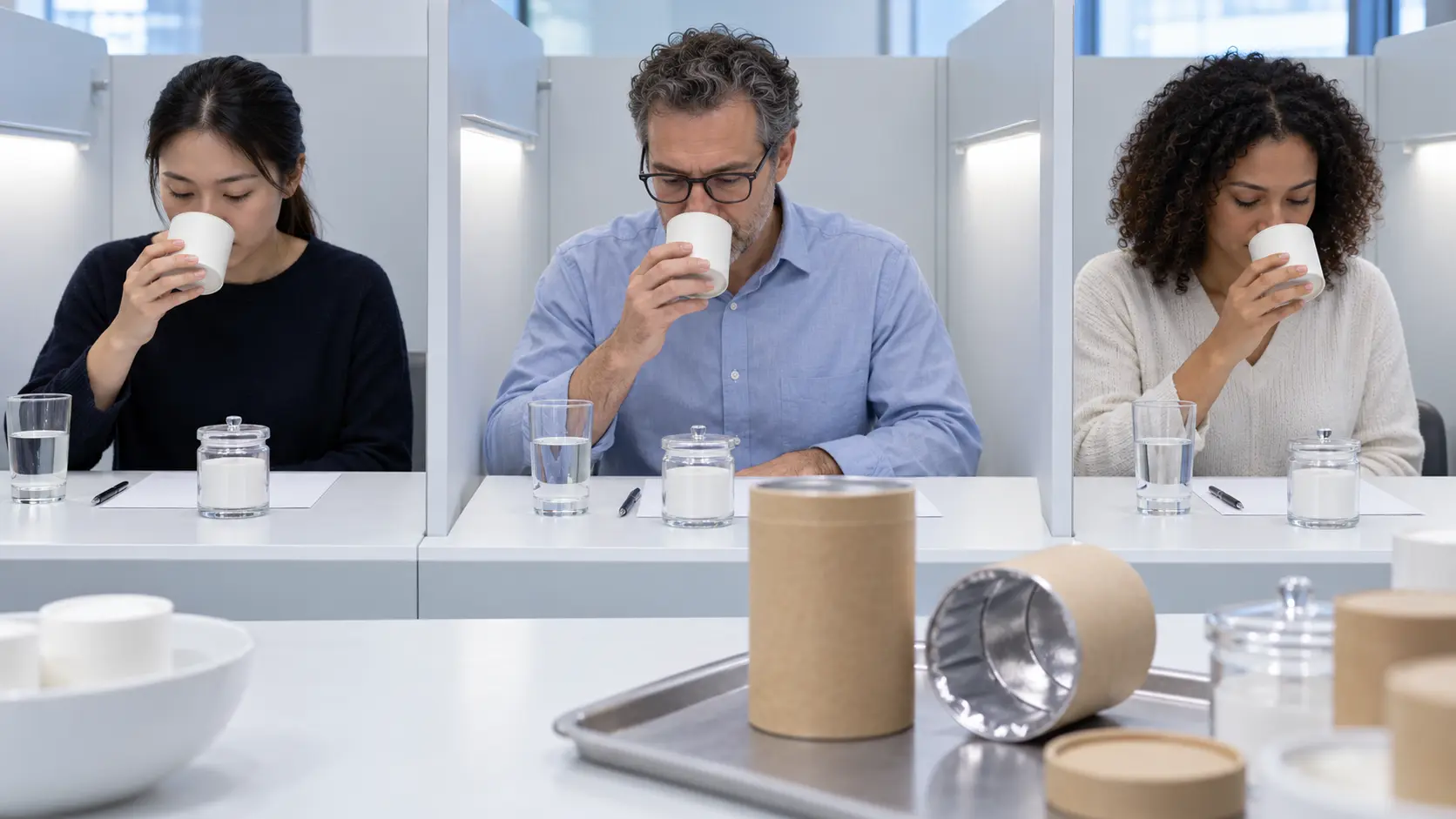
A competent sensory plan should define the reference or control, sample preparation, coding, exposure conditions, panel selection, evaluation environment, scoring method and acceptance rule before testing begins. Samples should be presented without brand cues where possible. The control food and test food must be handled consistently so the packaging is the meaningful variable.
TAPPI Test Method T 483 addresses odour in packaging materials and notes the importance of a trained human panel. A material-odour screen can help identify a suspect paperboard, adhesive or converted component, while ISO 13302 is focused on sensory changes to food or simulants. The methods answer related but different questions.
Test the Finished Can, Not Only Supplier Swatches
Supplier declarations and raw-material samples are useful, but converting can change sensory performance. Printing, lamination, adhesive application, forming, curing and closed-pack storage create a final combination that does not exist in an individual swatch. Evaluate the assembled paper can using production-representative materials and processing conditions.
Include the actual lid, membrane and liner. If food is packed directly, test the intended contact configuration. If the can is secondary packaging around a sealed pouch, confirm whether odours can still transfer through the pouch or affect the consumer when the can is opened. Record the sample code and bill of materials so a passing result cannot be applied to an untested replacement.
Control Drying, Storage and Transport
A freshly printed or glued can may have a different odour profile after adequate drying and airing. The production specification should define the required process completion and the conditions under which samples are evaluated. Avoid inventing one universal waiting time because ink, coating, adhesive, paperboard, climate and pack construction all affect the appropriate process window.
Finished cans can also absorb ambient odours. Store them away from solvents, fuels, fragrances, cleaning agents, smoke, damp cardboard and strongly scented goods. Use clean protective liners or bags where appropriate, inspect shipping cartons and containers, and avoid mixed loads that create a foreseeable contamination risk. A retention sample from each relevant lot supports later complaint investigation.
Build Sensory Checks Into Batch Approval
The approval process can have three levels. First, compare candidate materials before artwork and tooling are fixed. Second, assess the complete pre-production sample with the intended food or an appropriate test medium. Third, use a defined screening method for production lots, supported by periodic full evaluation when risk, volume or customer requirements justify it.
Set responsibility and escalation rules. A routine checker who detects an unusual smell should quarantine the lot and refer it to trained personnel rather than deciding alone that it is acceptable. The record should identify the sample, lot, age, conditioning, reference, assessors, result and disposition. Any change to paperboard, recycled-fibre content, ink, adhesive, coating, liner, supplier or process should trigger a documented review.
What Buyers Should Put in the Supplier Brief
Send the supplier the food type, direct-contact surfaces, target markets, planned shelf life, filling and storage conditions, barrier requirements, artwork coverage, closure structure and sensory acceptance expectations. Ask for a component bill of materials, relevant food-contact documentation, material and finished-can samples, process controls, batch traceability and change-notification terms.
Wenzhou Yiya Packaging Co., Ltd. has manufactured paper packaging since 2000 and lists food paper cans, high-sealing paper cans, foil-lined coffee canisters and foil-lined tea canisters among its product categories. Its website also states that the factory operates three Heidelberg printing presses. These facts support a structured sampling discussion, but they do not replace product-specific sensory evaluation or the buyer’s legal review.
Conclusion
Food paper can odor control works best when sensory quality is treated as a measurable product requirement. Map every component, define the real food and use conditions, select appropriate controls, test the converted can, protect finished packaging during storage and apply change control to every approved material.
Contact Yiya Packaging with your product, target market, dimensions, liner and closure preferences, artwork coverage and sensory requirements to discuss a custom paper-can sample. The final testing plan and acceptance limits should be agreed by the responsible brand, laboratory and regulatory specialists.
Frequently Asked Questions
Can a paper can pass migration testing and still affect flavour?
Yes. Chemical compliance and sensory acceptability are related but separate questions. A sensory assessment is needed when packaging-related odour or flavour change is a relevant risk.
Is smelling an empty can enough?
No. Empty-pack odour screening can identify obvious problems, but it does not show whether the intended food will develop a taint during realistic contact and storage.
Should recycled paperboard be rejected for aroma-sensitive foods?
Not automatically. The complete structure, functional barrier where used, intended contact and verified sensory performance matter more than a general assumption about fibre source.
Can one sensory report cover every artwork version?
Only when a qualified review shows that ink coverage, coatings, materials and processing remain adequately represented. A heavier or materially different design may require separate assessment.
What information should be recorded after a sensory complaint?
Keep the product and packaging lots, retained samples, storage history, transport conditions, opening date, complaint description and approved specification. This helps distinguish packaging odour from product or logistics causes.
Previous :
-
Related News
Leave me a message



News Recommendations