
How Food Brands Should Review Paper Tube Barrier Packaging?
From 12 August 2026, the European Union applies specific PFAS concentration limits to food-contact packaging under Regulation (EU) 2025/40. The rule covers food-contact packaging placed on the EU market and requires compliance to be demonstrated in technical documentation.
The regulation sets three measurement thresholds: 25 parts per billion for any PFAS measured through targeted analysis, 250 parts per billion for the sum of targeted PFAS, and 50 parts per million for PFAS including polymeric PFAS. Each threshold has its own analytical scope, so a simple supplier statement is not a substitute for evidence matched to the material and test method.
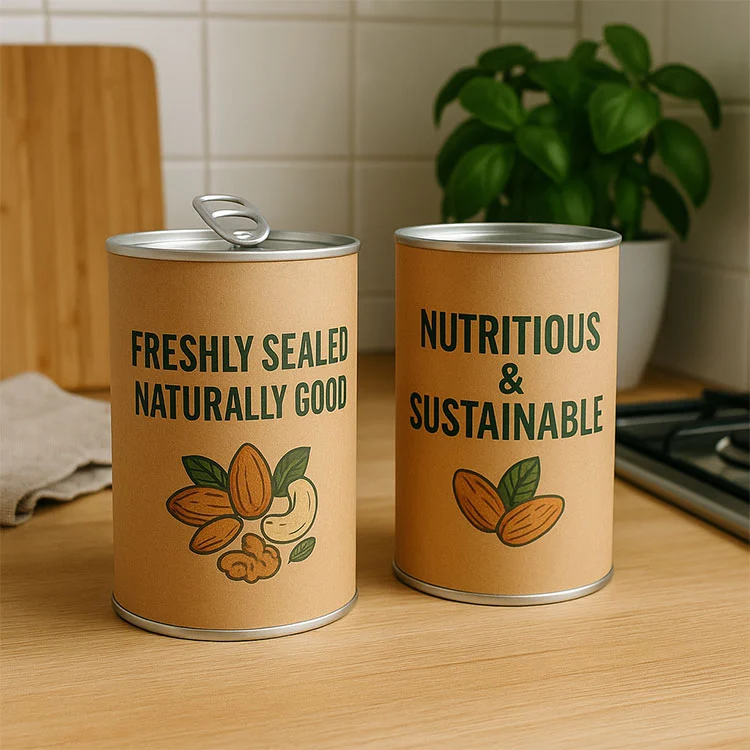
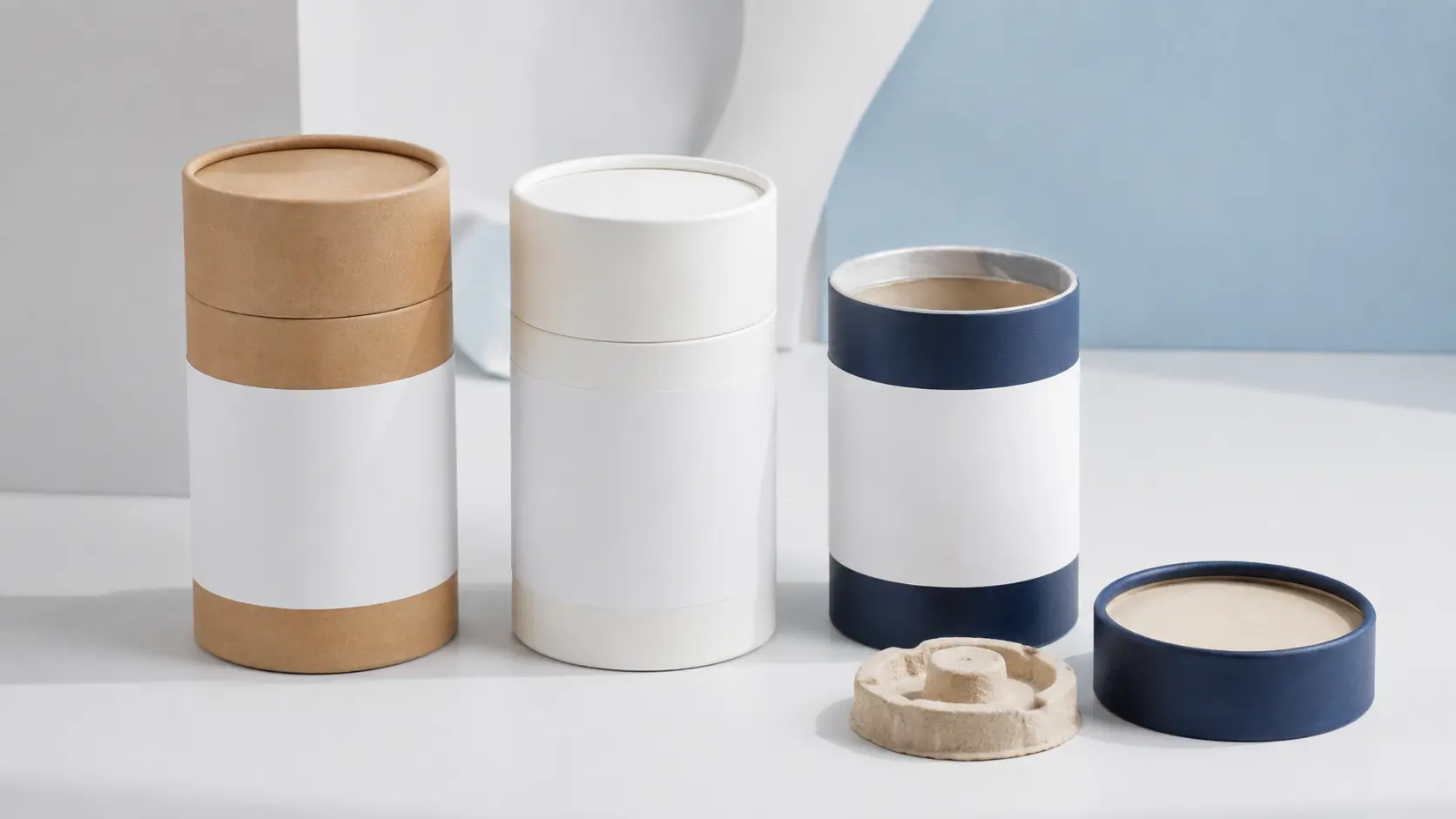
For paper tube packaging, this matters because paperboard alone may not provide the moisture, oxygen, aroma, oil or grease resistance required by food products. A barrier layer, coating, liner, adhesive or seal may be added to protect the contents. The commercial question is therefore broader than whether the visible tube is made from paper. Brands need to understand the complete food-contact system.
What Changed for Food-Contact Packaging in August 2026?
The European Commission states that the Packaging and Packaging Waste Regulation generally applies from 12 August 2026 and includes restrictions on PFAS in food-contact packaging above specified thresholds. Article 5 also requires the relevant compliance evidence to be included in the technical documentation.
This creates an immediate documentation task for brands, importers and packaging suppliers. A paper tube project should identify which surface touches the food, which materials sit behind that surface, and which substances may be present in coatings, adhesives, inks, varnishes, seals or other components.
The United States has moved in a similar direction through a different regulatory route. The U.S. Food and Drug Administration reported that grease-proofing substances containing PFAS are no longer being sold for paper and paperboard food packaging, and in January 2025 it determined that 35 related food-contact notifications were no longer effective. These actions do not make EU and U.S. requirements identical, but they show why international brands need market-specific evidence.
Why a Paper Tube May Still Need a Barrier
Dry tea, coffee, powdered supplements, confectionery and snacks can react differently to humidity, oxygen, light, aroma transfer and oil. The correct packaging structure depends on the product, shelf-life target, filling method and distribution environment.
A paper-heavy structure may work well when the product is already held in a sealed primary pouch or jar and the tube functions as secondary packaging. Direct food contact creates a different technical question. The inner surface must be selected and verified for the intended food type, contact time and storage conditions.
Brands should define the protection need before selecting the lining. Adding a high-barrier layer without a clear performance target may increase material complexity. Selecting too little protection can reduce shelf life or create product quality problems. The aim is an evidence-based structure that uses only the materials required for safe, stable performance.
Six Records to Request Before Approving a Food Paper Tube
A useful procurement file connects the finished package to its intended use. Buyers should request the following records before approving mass production:
1. An intended-use statement covering the food type, direct or indirect contact, filling process, contact time, storage temperature and target markets.
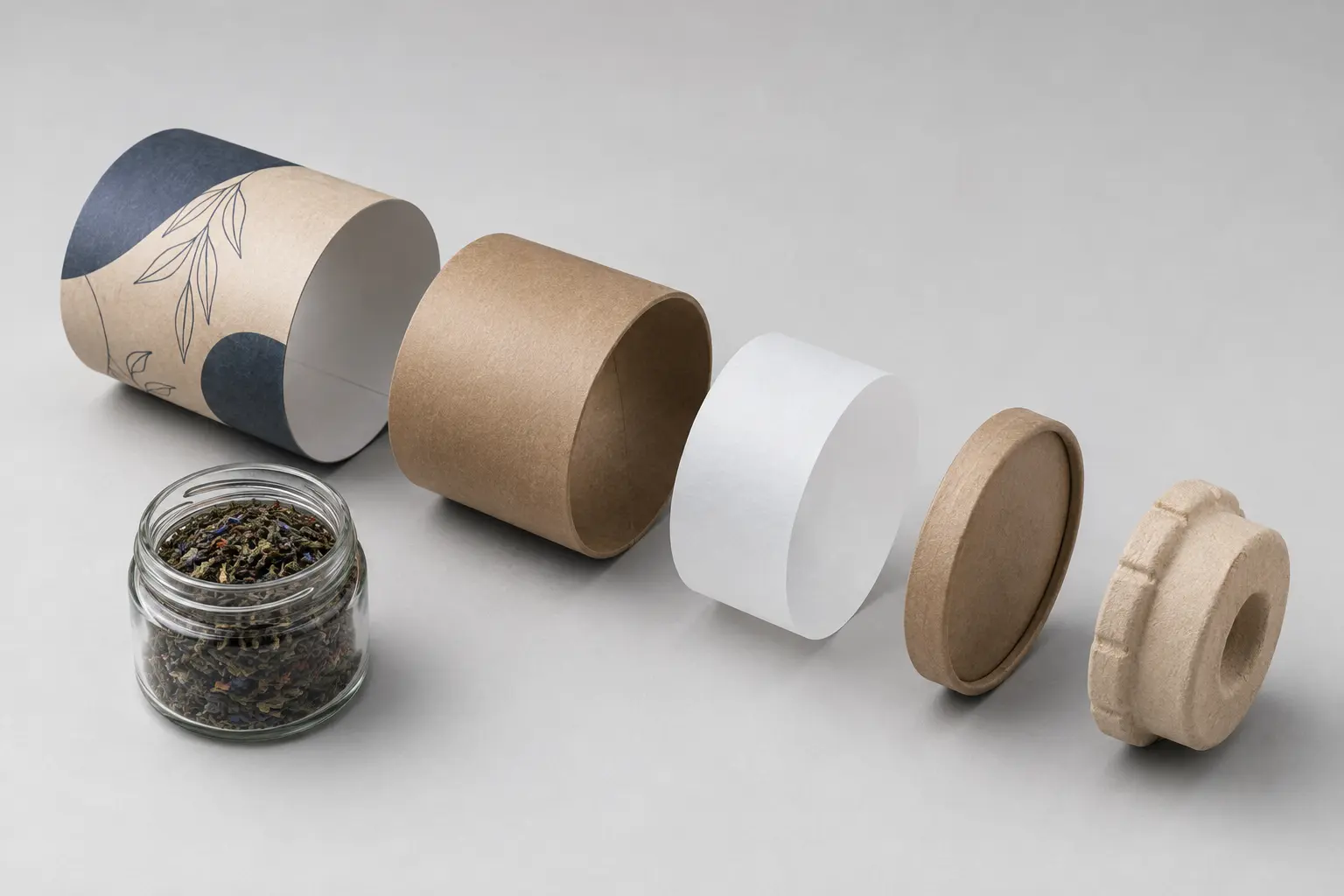
2. A component-level material declaration for the paperboard body, liner, coating, adhesive, ink, varnish, lid, base and any seal or insert.
3. PFAS evidence linked to the exact barrier material and the analytical method used, including the laboratory, sample identity, result units and detection limits where applicable.
4. Food-contact compliance documentation relevant to the destination market and the final intended use.
5. Performance data for moisture, oxygen, aroma, oil or grease resistance based on the product’s actual shelf-life needs.
6. A change-control agreement requiring notification before any material, supplier, coating, adhesive or production-process substitution.
A declaration should name the exact commercial material or clearly connect the test sample to the approved specification. Evidence for a generic family of coatings may not establish the status of a different formulation, supplier or production batch.
PFAS-Free Does Not Automatically Mean Plastic-Free
The terms “PFAS-free,” “plastic-free,” “recyclable” and “compostable” describe different attributes. A barrier can avoid intentionally added PFAS while still containing a polymer. A structure can use a paper tube body while also including a polymer film, adhesive or seal. A package may be recyclable in one collection system and unsuitable in another.
Marketing claims should therefore describe the verified feature precisely. If only the barrier paper has been tested for PFAS, the claim should not silently expand to the entire package. If a removable liner is used, disposal instructions should explain whether consumers need to separate it from the tube body.
The strongest claim is usually the narrowest claim supported by complete evidence. Brands should retain the approved material specification, test report, artwork version and supplier declaration in the same project file.
How to Test the Finished Packaging System
Chemical documentation and physical performance serve different purposes. PFAS analysis can address substance limits, while migration testing evaluates whether substances transfer into food under defined conditions. Barrier and shelf-life testing evaluate whether the package protects the product. A credible approval plan may include:
1. PFAS testing selected by a qualified compliance specialist for the target market and material system.
2. Overall and specific migration testing under conditions that represent the intended food, temperature and contact duration.
3. Grease or oil resistance testing when the product or filling process exposes the package to lipids.
4. Water-vapour and oxygen transmission testing when shelf life depends on moisture or oxygen control.
5. Aroma and odour evaluation for tea, coffee, spices and other sensitive products.
6. Seal, lid-fit and leakage checks on samples produced with the approved materials.
7. Transport testing on the complete product, paper tube and outer shipping carton.
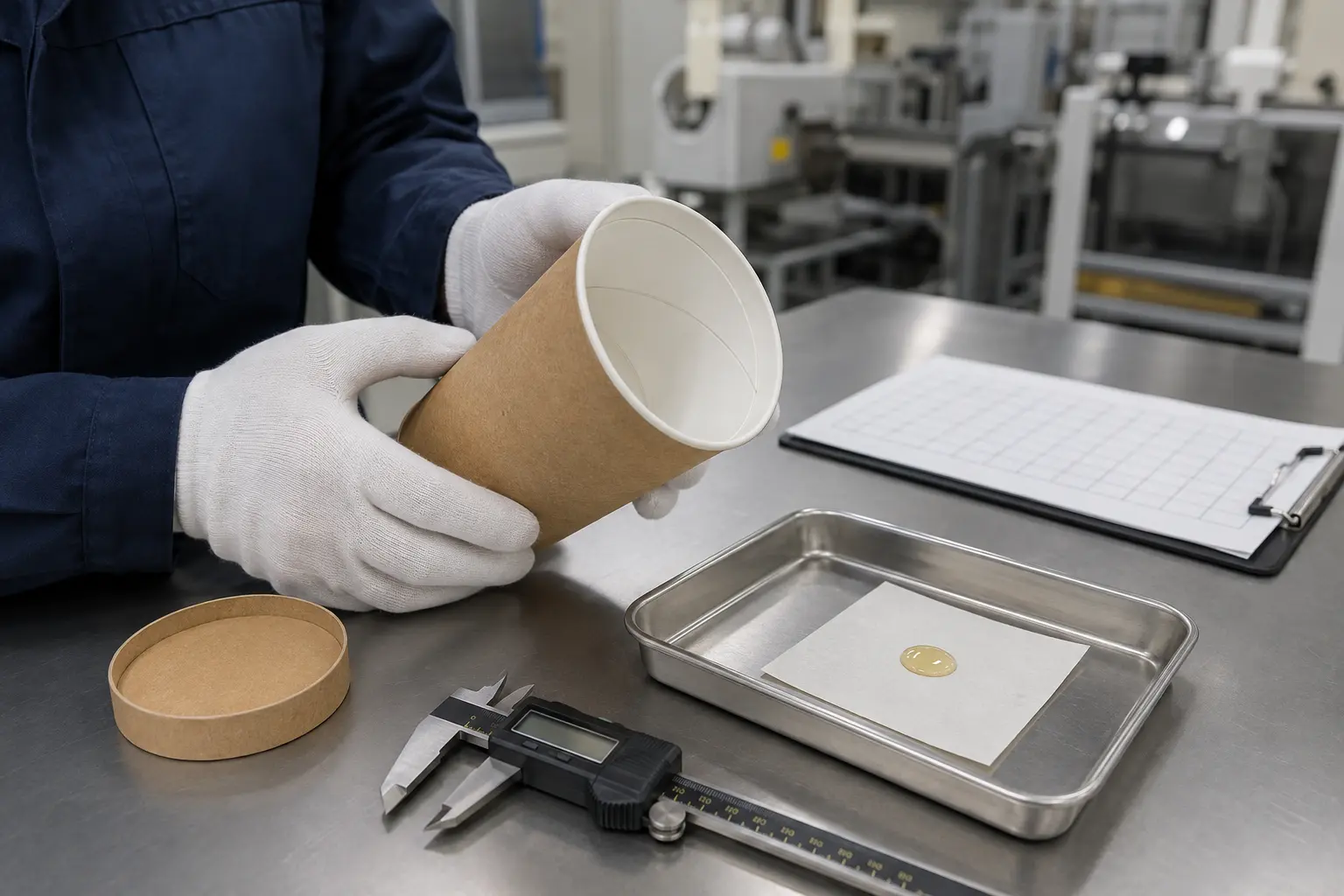
Testing should use the final structure whenever possible. Changing the liner thickness, adhesive, print coating or curing process after testing may require a technical review and, in some cases, new testing. Acceptance criteria should be agreed before the test begins so that the result can support a clear production decision.
A Practical Development Path for Barrier-Lined Paper Tubes
1. Define the product: food type, oil content, aroma sensitivity, filling temperature, shelf life and sales markets.
2. Confirm the packaging role: direct food contact, indirect contact through an inner pouch, or secondary presentation packaging.
3. Compare feasible barrier systems against the actual protection target and disposal pathway.
4. Produce prototypes using the intended production materials, dimensions, lid and sealing method.
5. Complete compliance and performance verification with qualified specialists and laboratories.
6. Approve a controlled specification and retain a reference sample before mass production.
Wenzhou Yiya Packaging Co., Ltd. develops customized paper tube and paper can structures for food, tea, coffee, supplements and other product categories. Projects can be adjusted by diameter, height, lid type, inner structure, printing process and finishing method.
To begin an enquiry, brands should provide the actual product or detailed dimensions, target market, intended contact type, shelf-life requirements, order quantity, filling method and any material restrictions. This allows the packaging structure and required evidence to be discussed at the same time.
The final compliance decision remains with the responsible economic operator and should be based on the finished specification, intended use and applicable market requirements. Early documentation reduces the risk of redesigning the tube after artwork, tooling or production approval.
Frequently Asked Questions
Do the EU PFAS limits apply to paper food packaging?
They apply to food-contact packaging regardless of the main packaging material when the regulated PFAS thresholds are met or exceeded. The complete structure and its intended use should be reviewed.
Is a supplier declaration enough to prove PFAS compliance?
A declaration is useful when it identifies the exact material and is supported by appropriate evidence. Brands should confirm the analytical scope, sample identity, units, detection limits and relationship to the final specification.
Can a paper tube be used without an inner barrier?
It depends on the product and packaging role. Secondary packaging around a sealed pouch or jar may not need direct-contact protection, while direct-contact food packaging often requires a verified barrier or liner.
Does PFAS-free mean the package contains no plastic?
No. PFAS status and plastic content are separate characteristics. The complete component list should be reviewed before making either claim.
What should a buyer send when requesting a food paper tube quotation?
Provide the product type, dimensions, filling method, direct or indirect contact, target markets, shelf-life needs, quantity, printing requirements and any barrier or material restrictions.
Related News
- Paper Tube Quality Control in 2026: A Practical AQL Inspection Guide for Buyers
- What Light-Blocking Eco Cardboard Tubes Help Niche Perfume Brands Pass EU PPWR Audits?
- How Do Composite Wine Paper Cylinders Solve Export Compliance & Logistics Breakage Troubles For Spirits Brands?
- Why Is a Kraft Paper Tube Essential for Modern Packaging Solutions?
- Why Is Recycled Paper Tube Packaging Becoming Essential for Modern Brands?
- Why Is Sustainable Recycled Paper Canister Becoming the Future of Eco-Friendly Packaging?
Leave me a message