
FSC Label Approval for Paper Tube Packaging Under the 2026 Trademark Standard
FSC published Version 3-0 of its trademark standard for certificate holders on 1 January 2026. The requirements became effective on 1 July 2026, with a transition period that runs until 1 January 2029. For brands buying custom paper tubes, the change is more than a graphic update. It affects how label files are obtained, which claim is used, what information appears on the pack and how artwork approval is documented.
The practical rule is simple: an FSC logo is not a decorative sustainability icon. The finished package and the organization applying the mark must follow the relevant FSC chain-of-custody and trademark controls. FSC’s own on-product labelling guidance says brands should verify the final-product supplier, specify FSC-certified material and ask that supplier to place the label. Only authorized certificate holders can access the official label graphics and arrange approval. FSC on-product labelling guidance sets out these steps directly.

Why the 2026 standard matters to paper tube buyers
Paper tubes combine several elements: the wound paperboard body, printed wrap, lid, base, liner, insert, adhesives and finishing. A brand may intend to source certified board, yet the desired on-pack claim depends on the controlled product group and the certified supply chain—not on a visual estimate of how much paper the tube contains.
Version 3-0 introduces an FSC QR label, updates mandatory label elements, gives more graphic flexibility, permits dual labelling under defined conditions and retires the “Forests For All Forever” mark. These options can help design teams, but they also make version control more important. Artwork should identify the applicable standard version, label type and approved file rather than relying on an old pack as a visual reference.
Start with the claim before the design
Confirm the certified product and supplier scope
Ask the supplier for its current FSC certificate or licence details and verify them in FSC Search. Then confirm that the certificate scope covers the relevant activity and product group. A factory displaying an FSC certificate does not mean every paper tube it produces may automatically carry every FSC label. The purchase specification and order documentation must identify the certified input and the claim to be supplied.
Define the complete packaging configuration
List the tube body, outer wrap, paper lid, metal or plastic closures, insert, liner and decorative parts. Confirm which component is the labelled product and whether the label description could mislead a buyer about non-paper parts. If the lid or insert changes after approval, the claim and artwork should be reviewed again.
Separate FSC claims from other environmental claims
An FSC label addresses responsible forest-based sourcing and chain-of-custody requirements. It does not, by itself, demonstrate that a package is recyclable in every collection system, plastic-free, compostable, food-contact compliant or lower carbon. Keep those claims in separate evidence files and word them according to the target market.
Build an approval-ready paper tube artwork file
The official label should come from the authorized certificate holder’s FSC Brand Hub, not from an internet search, a screenshot or a reconstructed vector. Under Version 3-0, the standard label includes mandatory elements such as the FSC logo, website, claim or label title, product type and licence code. The QR label keeps the product type visible on pack and provides other information through an FSC-hosted landing page.
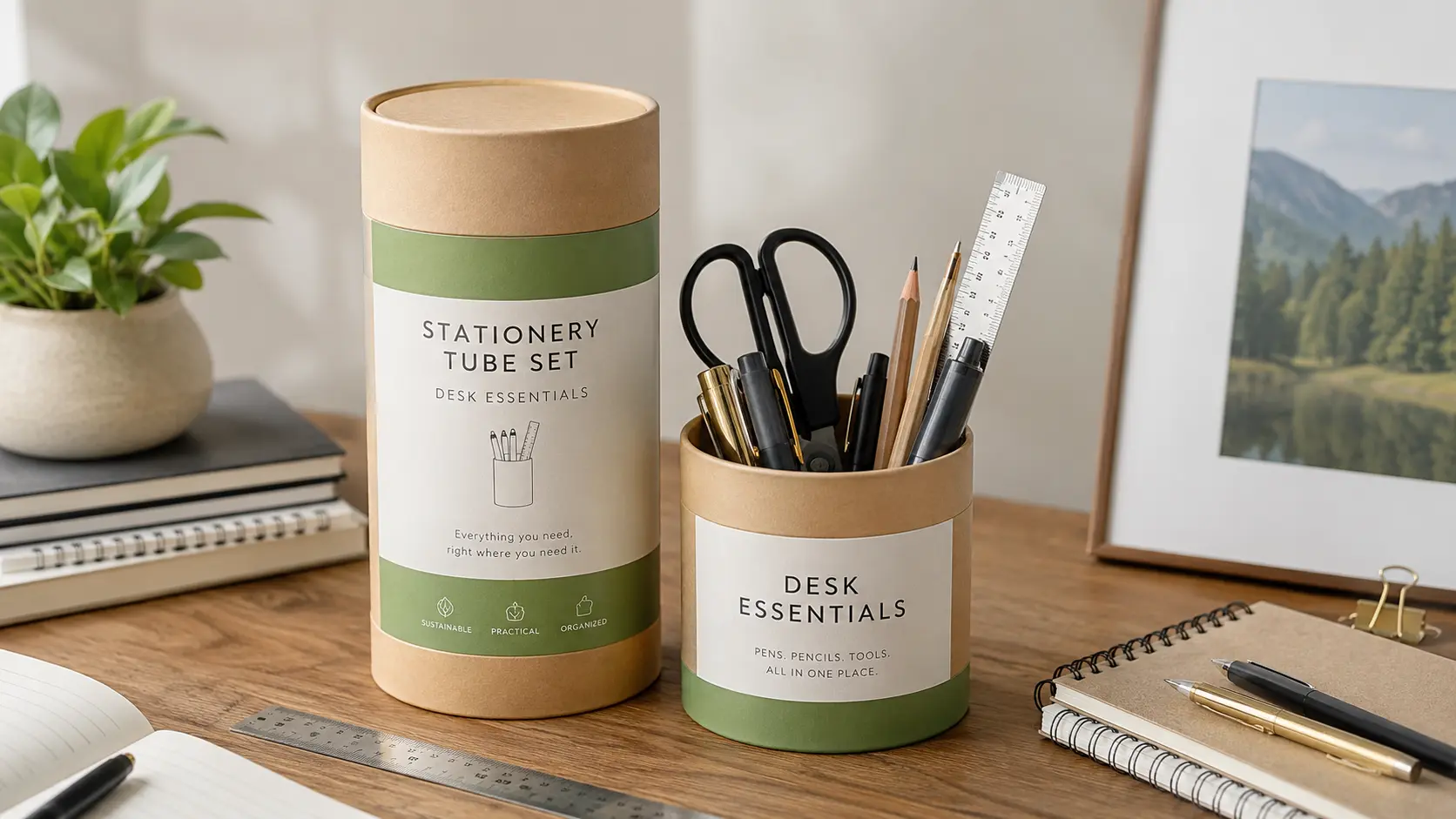
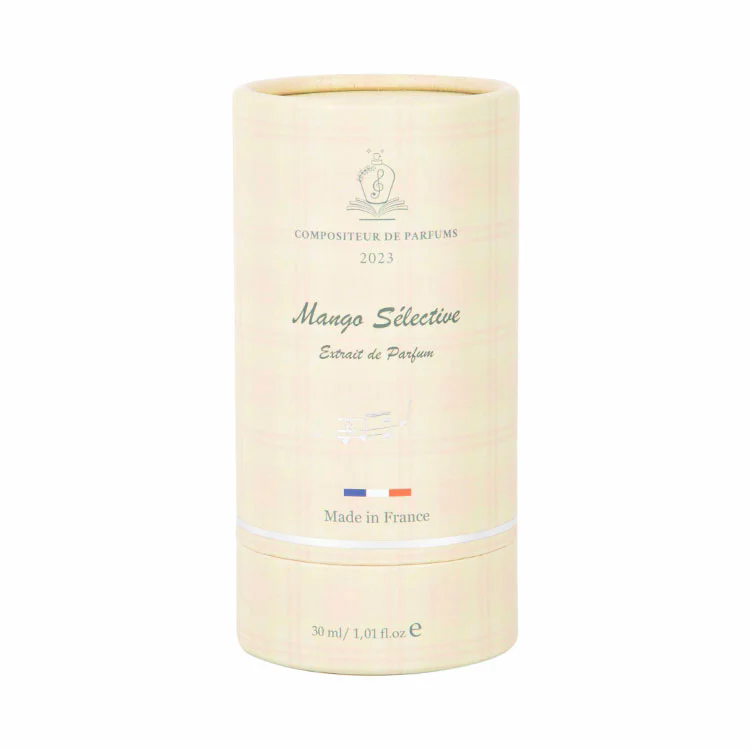
For a cylindrical package, reserve a quiet, readable area away from seams, heavy embossing, metallic reflections and extreme curvature. Check the flat artwork and a wrapped physical proof. The label may be technically present but still hard to read if it crosses the wrap seam, falls under the lid overlap or is distorted around a small-diameter tube.
Recommended artwork release file
1. Final dieline with internal diameter, external height, lid overlap and wrap seam position.
2. Official FSC label file and licence code supplied through the authorized workflow.
3. Label type, product type and claim matched to the certified order.
4. Print colour, background contrast, minimum size and clear-space checks.
5. Certification-body approval reference or other permitted approval record.
6. Artwork version, approval date, approver and production SKU.
7. Change-control trigger for materials, supplier, dimensions, finishes or closures.

Use the transition period without creating mixed files
FSC provides a transition period until 1 January 2029, and a 2026 derogation permits selected Version 3-0 graphic provisions to be used early by organizations that have not yet formally transitioned, within the stated conditions. This flexibility is useful, but it should not become permission to combine requirements from different versions informally.
Buyers should record which standard version the certificate holder is applying, which derogation is relevant, and which approval route was used. Retire superseded label assets from shared folders. When the same brand has multiple tube sizes, approve each artwork or approved family according to the certificate holder’s process rather than scaling one label freely.
Control the approved label in mass production
Trademark approval is only valuable if the factory produces the approved version. Add the artwork reference to the purchase order, production job ticket and inspection record. At incoming material control, confirm the paper claim shown on supplier documents. At print release, compare the file name, licence code, claim and product type with the approval record.
During first-article inspection, check the physical position and legibility of the label after wrapping. Verify that foil, embossing, varnish or seam pressure has not reduced clarity. Keep an approved master sample and retain batch records that connect the printed wrap to the order. If the supplier, board grade, claim, label file or tube construction changes, stop and determine whether renewed approval is required before printing continues.
A buyer workflow from request to release
1. Send the supplier the target market, product use, tube structure and desired FSC claim.
2. Verify the final-product supplier and relevant certificate scope in FSC Search.
3. Confirm the certified material specification and claim on commercial documents.
4. Reserve a suitable label area on the cylindrical dieline.
5. Receive the official label asset through the certificate holder’s controlled process.
6. Complete trademark approval before releasing print files.
7. Approve a wrapped physical proof, not only a flat PDF.
8. Link the approved artwork version to the purchase order and quality plan.
9. Recheck approval after any material, supplier or structural change.
How Yiya can support a controlled packaging project
Wenzhou Yiya Packaging Co., Ltd. publicly displays FSC among its certificates and produces custom paper cans and tubes with integrated printing capabilities. For a project that requires an FSC label, buyers should still confirm the current certificate scope, the specific material claim and the approval path for that order.
A useful enquiry includes the physical product, tube dimensions, lid and insert structure, target market, artwork, planned environmental statements and desired sourcing claim. Yiya can then evaluate the package structure, printing area and production requirements as one controlled specification. Contact Yiya Packaging to discuss a sample and the documentation needed before artwork release.
Conclusion
The 2026 FSC trademark standard gives brands more flexible label options, including a QR label, but it does not remove the need for disciplined chain-of-custody and artwork approval. The safest route is to confirm the claim first, use an official label file, approve the cylindrical proof and tie the final artwork to the certified order and production batch. That process protects both the trademark and the buyer’s packaging launch.

Frequently asked questions
Can a brand download an FSC logo and place it on a paper tube
No. Official on-product label assets are controlled. FSC guidance says the certified supplier should use the official label graphics and arrange approval through the applicable certification process.
Does an FSC certificate mean every tube can carry a label
No. Buyers should verify the supplier’s current scope, the product group, the certified input and the claim for the specific order.
What changed in FSC-STD-50-001 V3-0
Key changes include the FSC QR label, updated mandatory elements, more design flexibility, defined dual-labelling options and retirement of the “Forests For All Forever” mark.
Must every company switch immediately
The standard became effective on 1 July 2026 and FSC provides a transition period until 1 January 2029. The certificate holder should identify which version and transition provisions apply to its approval.
Should the label be checked on a physical paper tube
Yes. A wrapped proof reveals seam, overlap, curvature, finish and legibility issues that may not be visible in a flat artwork file.
Previous :
-
Related News
- EU PPWR EPR Talks What Small Paper Tube Brands Should Prepare Now
- Paper Tube Quality Control in 2026: A Practical AQL Inspection Guide for Buyers
- How Food Brands Should Review Paper Tube Barrier Packaging?
- What Light-Blocking Eco Cardboard Tubes Help Niche Perfume Brands Pass EU PPWR Audits?
- How Do Composite Wine Paper Cylinders Solve Export Compliance & Logistics Breakage Troubles For Spirits Brands?
- Why Is a Kraft Paper Tube Essential for Modern Packaging Solutions?
Leave me a message


News Recommendations