
Paper vs Plastic Inserts: How to Choose Protection for a Paper Tube
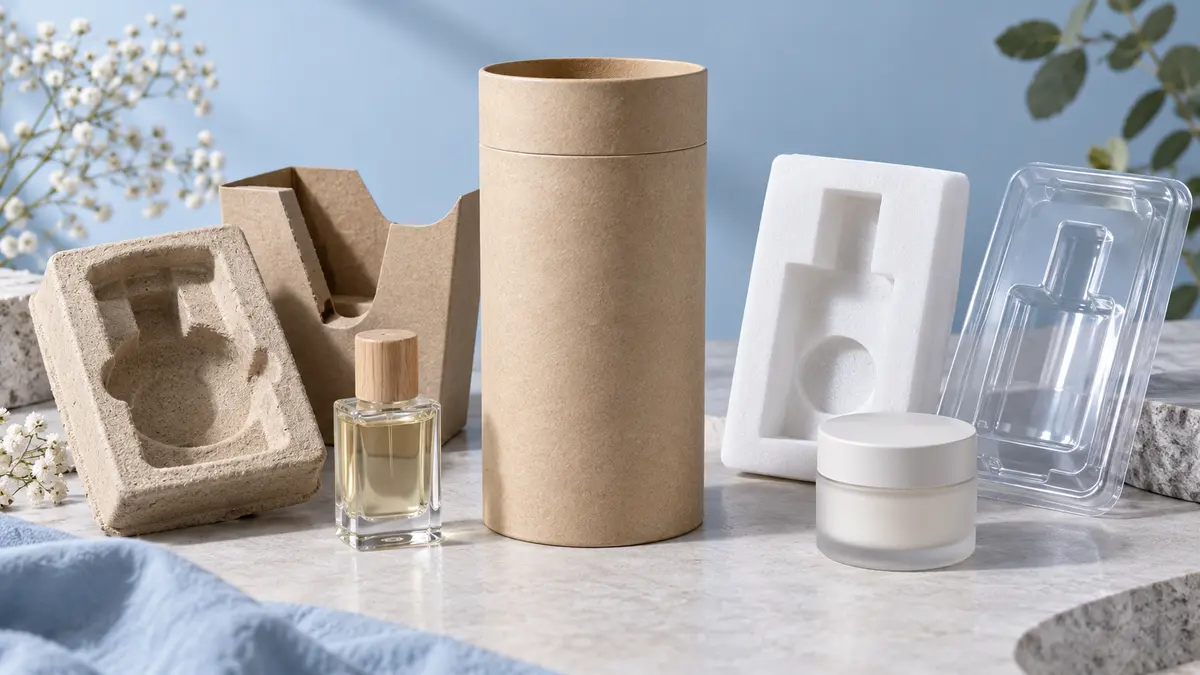
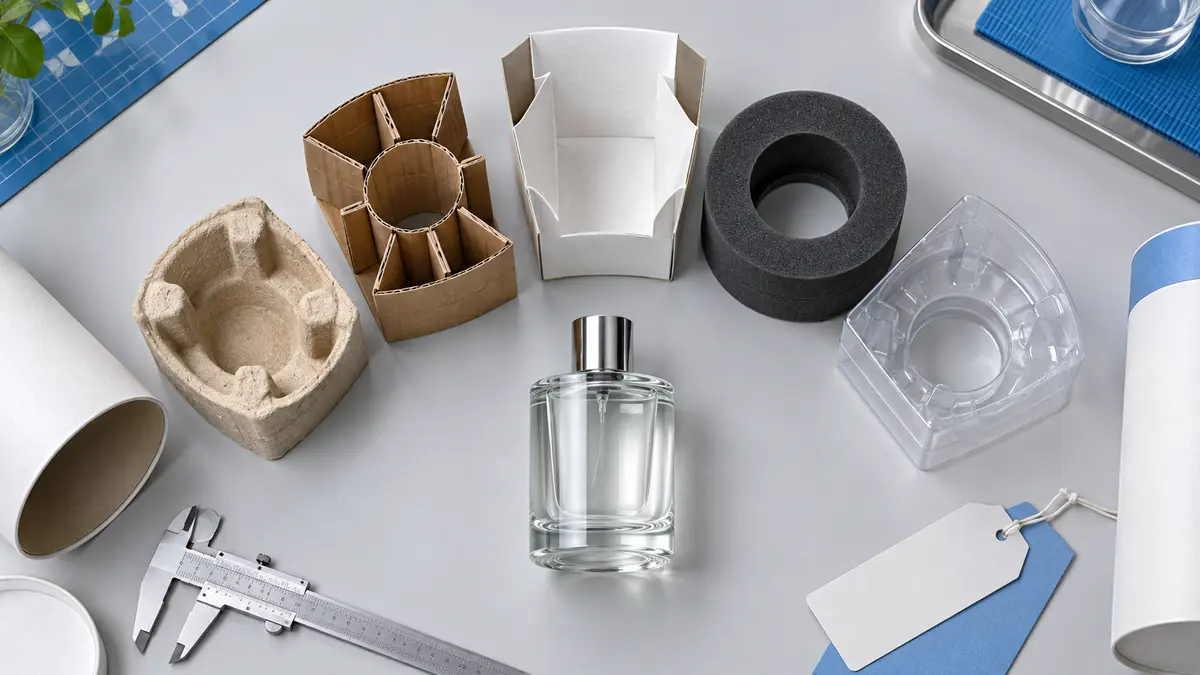
An insert is the small component that often determines whether a paper tube feels secure, opens cleanly and reaches the customer without damage. It controls movement, protects fragile points and positions the product for presentation. Yet insert selection is frequently reduced to one question: paper or plastic? That is too simple. Molded pulp, folded paperboard, corrugated board, EVA foam and thermoformed plastic trays behave differently, and none is the best choice for every product.
A useful comparison starts with the product and distribution risks, then evaluates the minimum structure that can control them. Material preference matters, but it should follow a functional brief. Replacing a high-performance insert with a lighter structure without retesting can increase damage; adding excessive foam can protect the product while increasing material and separation complexity.
First Define What the Insert Must Do
List the product’s mass, centre of gravity, fragile surfaces, protrusions, opening direction, dimensional tolerances and acceptable movement. A glass fragrance bottle may need to protect its pump, shoulders and printed coating. A wine bottle may need top and bottom control. An electronic accessory may need a clean cavity and cable management. A jar may require finger clearance so the consumer can remove it without shaking the package.
Also define the distribution route: pallet, retail case, courier parcel or e-commerce fulfilment. The same retail tube can experience very different drops, vibration, stacking and climate exposure. The insert must work with the paper-tube wall, lid, base and outer shipping case rather than being evaluated alone.
Molded Pulp Inserts
Molded pulp can form shaped pockets, ribs and support areas from fibre-based material. It can provide a natural tactile appearance and may help a brand keep more components within a fibre-based design language. It is suitable when product geometry can be supported by the available draft angles, wall thicknesses and manufacturing tolerances.
Buyers should examine surface texture, dust, edge definition, moisture sensitivity, dimensional repeatability and whether the cavity releases the product easily. A premium bottle with a delicate coating may need contact points designed away from visible surfaces. The end-of-life claim must still reflect the complete pack and local collection system; a fibre insert does not automatically make every tube configuration recyclable.
Folded Paperboard and Corrugated Inserts
Die-cut paperboard can create platforms, collars and locking tabs, while corrugated board can add cushioning and stacking strength. These structures are often efficient for regular geometries and can ship flat before assembly. They can also provide printable surfaces or an orderly unboxing sequence.
The trade-offs are fold accuracy, assembly time, tab security, exposed edges and limited conformity around complex shapes. Direction of the paper grain and corrugation, score quality and the relationship between cut size and tube diameter affect the final fit. A design that looks correct in a CAD drawing can buckle or spring open after conversion, so assembly trials are essential.
EVA and Other Foam Inserts
EVA foam can be cut into precise cavities and layered to control depth. It is often selected for premium presentation, small dimensional clearances or products that need soft contact and concentrated cushioning. Colour and density choices can support the desired appearance, but buyers should confirm the exact material, thickness, density, lamination and adhesives used in the approved sample.
Foam can be difficult to separate when permanently glued to the paper tube. It may also show dust, compression set, odour or surface marks depending on formulation and use. Environmental language must be specific: a paper outer tube does not make an EVA insert paper-based, plastic-free or accepted in a paper recycling stream.
Thermoformed Plastic Trays
A thermoformed tray can offer crisp cavities, consistent product orientation, visibility and repeatable automated or manual loading. It can be useful for complex shapes, multi-component sets or packs where presentation is tightly controlled. Material identification, thickness, colour, recycled-content evidence and the ability to remove the tray should be documented.
Thin plastic is not automatically the lowest-impact option, and a heavier paper substitute is not automatically better. Recovery depends on the polymer, colour, size, local sorting system and whether the consumer separates the tray. The United Nations Environment Programme recommends a life-cycle approach to single-use plastic decisions, including the function and the effects of alternatives. Buyers should therefore compare complete solutions against the same protection requirement.
Compare Inserts Against the Same Functional Unit
The fair comparison is not one insert by appearance or weight alone. It is the complete package needed to deliver one saleable product through the intended route. Record the mass of the tube, insert, closure and shipping case; the number of units per carton; assembly time; damage rate in trials; and the intended recovery route. If one option needs a larger tube or more outer-carton material, include that change.
The EU Packaging and Packaging Waste Regulation generally began applying on 12 August 2026 and directs packaging toward prevention, recyclability, reuse and lower primary raw-material use. Exact obligations have phased dates and role-specific requirements. A practical design response is to avoid unnecessary components, keep materials identifiable, prefer removable inserts when this does not compromise performance, and document why each component is needed.
Removable or Permanently Fixed?
A removable insert can help consumers separate materials and can simplify component replacement during development. It must still stay positioned during loading, transport and opening. A permanently glued insert may improve assembly security but can make separation harder and introduces an adhesive interface. The correct decision depends on movement risk, consumer handling, manufacturing speed and the destination recycling instructions.
Ask whether the insert can be removed without tools, whether it creates loose small parts, whether adhesive is applied consistently, and whether removal damages the paper body. Disposal claims should apply to the approved configuration, not to a prototype with a different attachment method.
Prototype and Test the Complete Pack
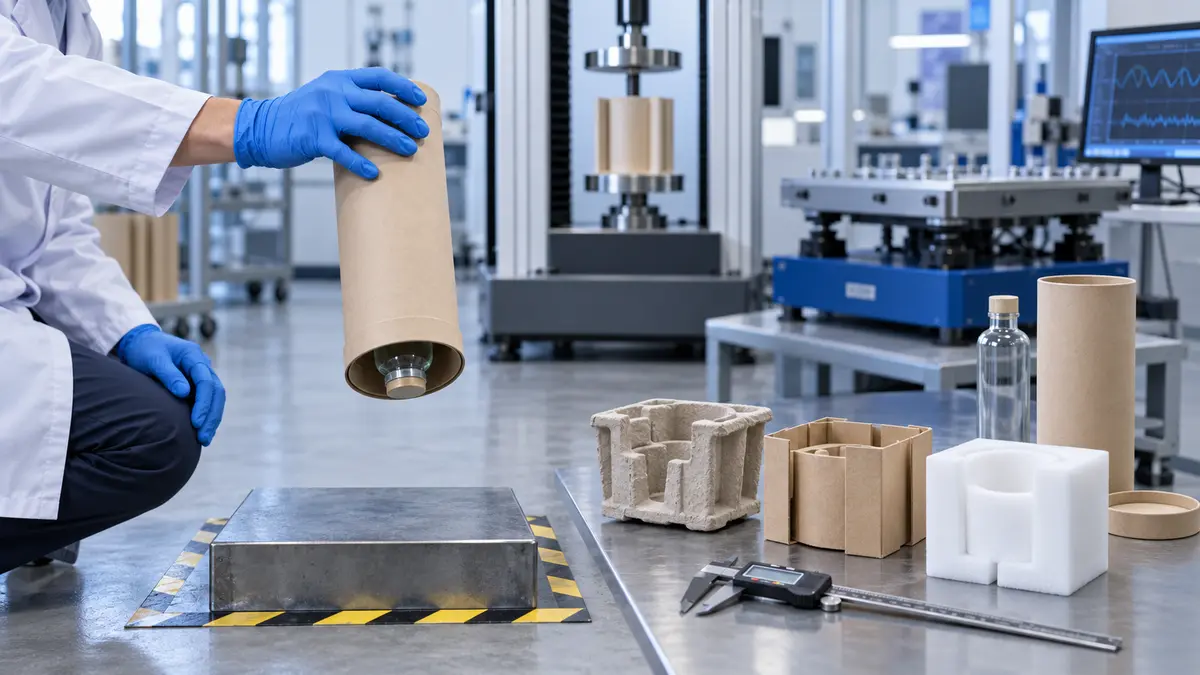
Begin with the actual product, not only dimensions. Check loading force, removal force, clearance, movement, contact marks, lid closure and the appearance after repeated opening. Then evaluate the complete retail and shipping pack under conditions relevant to its route. ISTA publishes test procedures for different distribution environments; the buyer and qualified laboratory should select the appropriate protocol rather than applying one procedure to every shipment.
• Measure the product, tube and insert before and after conditioning.
• Inspect contact points for abrasion, pressure marks and finish transfer.
• Check whether the insert rotates, lifts or collapses inside the tube.
• Review drop, vibration and compression results together with the outer carton.
• Confirm that the post-test product and retail pack meet agreed acceptance criteria.
What to Put in the Supplier Brief
Provide product samples, maximum and minimum dimensions, weight, fragile areas, desired presentation, loading method, target market, order quantity, distribution route, preferred materials and environmental claims. Request an insert drawing, material description, attachment method, dimensional tolerances, approved physical sample, test plan and change-notification process.
Yiya Packaging’s public product pages list molded pulp, EVA foam and corrugated card as custom insert options for paper cans. Its website also presents printed paper tubes for cosmetics, wine, food and other applications. These options create a useful starting point, but material selection and performance must be verified for the buyer’s actual product and route.
Conclusion
Paper versus plastic is not a universal ranking. Molded pulp and paperboard can support a fibre-based design and straightforward material communication in suitable applications. EVA and thermoformed trays can offer precise fit, soft contact or repeatable cavities where those functions are needed. The best insert is the least complex verified structure that protects the product, supports assembly and gives consumers accurate end-of-life information.
Contact Yiya Packaging with the physical product, dimensions, weight, target market, distribution route and preferred insert material to discuss a paper-tube sample and fit-testing plan.
Frequently Asked Questions
Is a molded pulp insert always recyclable with the paper tube?
No. Recyclability depends on the complete structure, coatings, adhesives, dimensions and local collection and recycling systems. Claims should be checked for the destination market.
When is EVA foam useful in a paper tube?
It can be useful when the product needs precise cavities, soft contact or premium presentation. Its density, thickness, attachment and material identity should be specified.
Can a paperboard insert protect a glass bottle?
It may, when the geometry and complete pack are engineered and tested for the relevant route. The answer cannot be confirmed from material name alone.
Should the insert be glued into the tube?
Only when attachment is needed for performance or assembly. Buyers should compare security with consumer separation, adhesive control and recyclability communication.
What tests should be used for an export paper tube?
Use fit and handling checks plus distribution tests selected for the actual parcel, case or pallet route. Agree the protocol and failure criteria with a qualified laboratory and the responsible brand.
Related News
Leave me a message


News Recommendations